

News
-
10/09/2026 Danica Backes Jedrzejek joined our lab as a 2nd year undergraduate. Welcome!
-
08/24/2026 Katelyn received the Gabrielle Weinhausen Endowed Undergraduate Biology Scholarship!
-
07/13/2026 Jerry defended his Master's thesis with flying colors!
-
05/19/2026 Kimberly won a Eureka Research Scholarship for Biological Sciences Majors!
-
05/01/2026 Jayden won a Caltech Summer Undergraduate Research Fellowship (SURF)!
-
03/09/2026 Jayden Lee joined us as a 1st year undergraduate. Welcome!
-
02/27/2026 Takeya won the JSPS Grant-in-Aid for Fund for the Promotion of Joint International Research!
-
12/17/2025 Olivia Poell joined us as a 2nd year undergraduate. Welcome!
-
12/16/2025 Keshav Gaddam joined us as a 2nd year undergraduate. Welcome!
-
09/05/2025 Jibin received an F99 award from National Cancer Institute!
-
05/19/2025 Kimberly Khow joined our lab as a 2nd year undergraduate. Welcome!
-
05/08/2025 Katelyn Thai joined our lab as a 2nd year undergraduate. Welcome!
-
02/24/2025 Eric Shao joined our lab as a 2nd year undergraduate. Welcome!
-
01/03/2025 Takeya's paper published on Science Immunology!
Decoding the molecular logic of immune checkpoint signaling
Our lab works at the interface of biochemistry, cell biology, and immunology to understand the fundamental mechanisms of immune checkpoint signaling. Immune checkpoints act as molecular “brakes” that normally restrain immune responses, but tumors can hijack these pathways to escape immune destruction. While antibody-based checkpoint blockade has led to remarkable clinical successes, these therapies benefit only a fraction of patients and tumor types. We believe that a deeper mechanistic understanding of checkpoint regulation is essential for broadening the reach of cancer immunotherapy. To address this challenge, we combine cell-free reconstitution, live-cell imaging, and cell-based assays to define how immune checkpoints operate at the molecular and cellular levels.

Image by Graham Johnson
Cell free reconstitution: We reconstitute signaling networks on model membranes to gain quantitative, in-depth insights into T cell signaling that are invisible to traditional approaches.
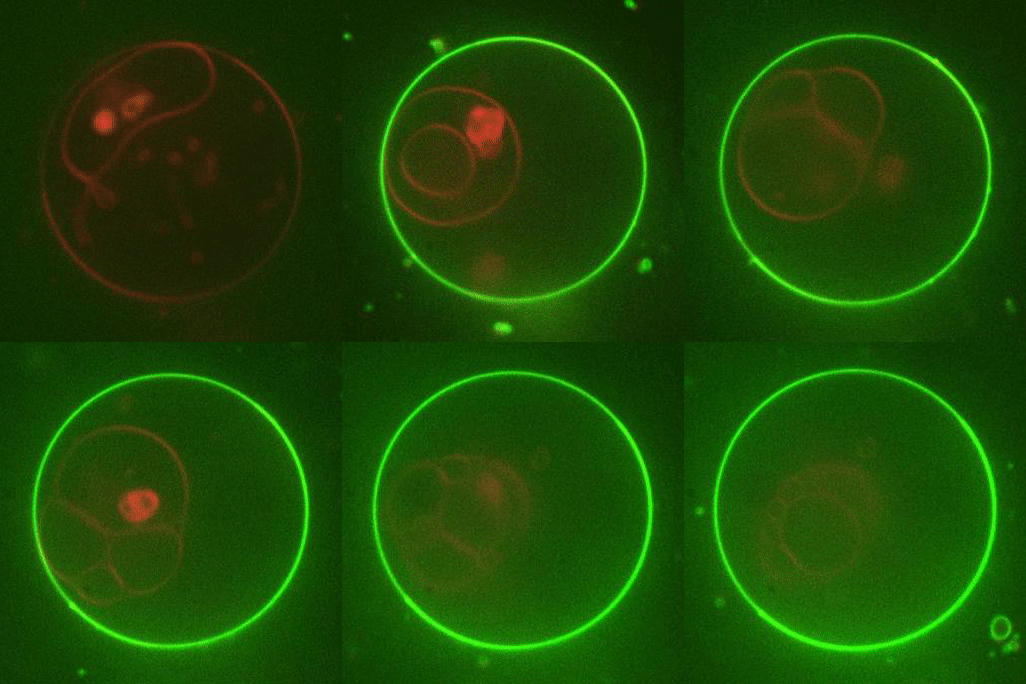
Signaling dynamics: We probe the spatiotemporal dynamics of signaling proteins in live T cells.

Cell cultures: We develop precise and robust cell culture assays to probe both proximal and distal readouts of immune checkpoints signaling.

Mouse models: We cross-check our findings between in vitro systems and animal models.
